

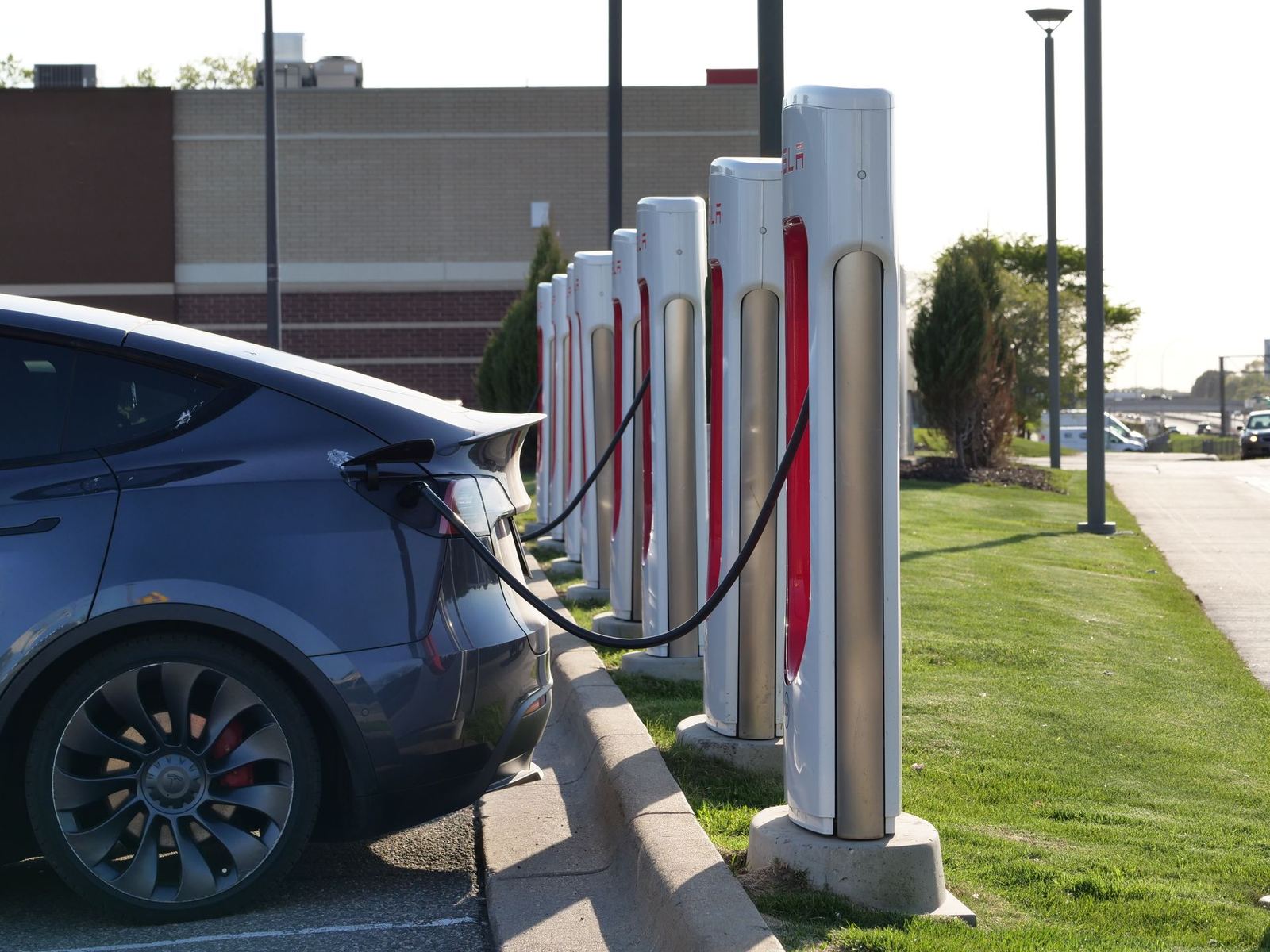
The difference between AC and DC, a table of charging times, a home Wallbox and practical tips for charging on the road.
The first question of those thinking of going electric is: "Where and how fast will I charge?" The answer depends on the charging type you use, the car's battery and the charge level. This guide summarises the essentials you need in daily life.
AC vs DC charging
In AC (alternating current) charging, the on-board charger inside the car converts power for the battery; the power limit is usually 7.4 or 11 kW. Wallboxes used at home and work are AC. In DC (direct current) fast charging the conversion happens in the station and power reaches 50 to 200 kW, ideal for short stops during a journey.
10% to 80% charging time on a 77 kWh battery
| Charging type | Power | Approximate time |
|---|---|---|
| Household socket | 3.7 kW | 16 hours |
| Single-phase Wallbox | 7.4 kW | 8 hours |
| Three-phase Wallbox | 11 kW | 5.5 hours |
| DC fast | 50 kW | 1 hour 12 min |
| DC fast | 150 kW | 24-26 min |
Times are calculated linearly at 90% efficiency; in fast charging, power falls as the battery fills, which is why going beyond 80% is often inefficient on a long trip.
80% of charging happens at home
That is why the most important investment is a Wallbox. On the night tariff, 100 kWh of electricity costs about a third of the fast-charging price. If you live in an apartment block you need management board approval; the technical file we prepare shortens the process.
Three tips for charging on the road
- Plan the route in the app; the car suggests charging stops automatically and pre-heats the battery before arrival.
- On a long trip, charging between 10% and 60% is faster than waiting until 80%.
- Prefer stations next to a café or shop; 20-25 minutes pass easily.
Connector compatibility
In Europe and Turkey, Type 2 is standard for AC and CCS2 for DC. Lumen models are compatible with both Type 2 and CCS2; no adapter is needed.
Charging etiquette and payment
Fast-charging stations are shared resources. Unplugging when you reach 80% shortens other people's wait. The Lumen app notifies you when the target level is reached, and occupancy at Hub stations updates within minutes. Payment is automatic from the app or a registered card the moment you plug in.
Winter and summer charging
Charging speed drops in the cold, so starting battery pre-heating before you reach the station noticeably shortens charging time. In summer, charging the car in a shaded or covered area reduces cooling energy.
You can book a free survey for a charging solution at your home or workplace and try your own scenario with our charging time calculator.